


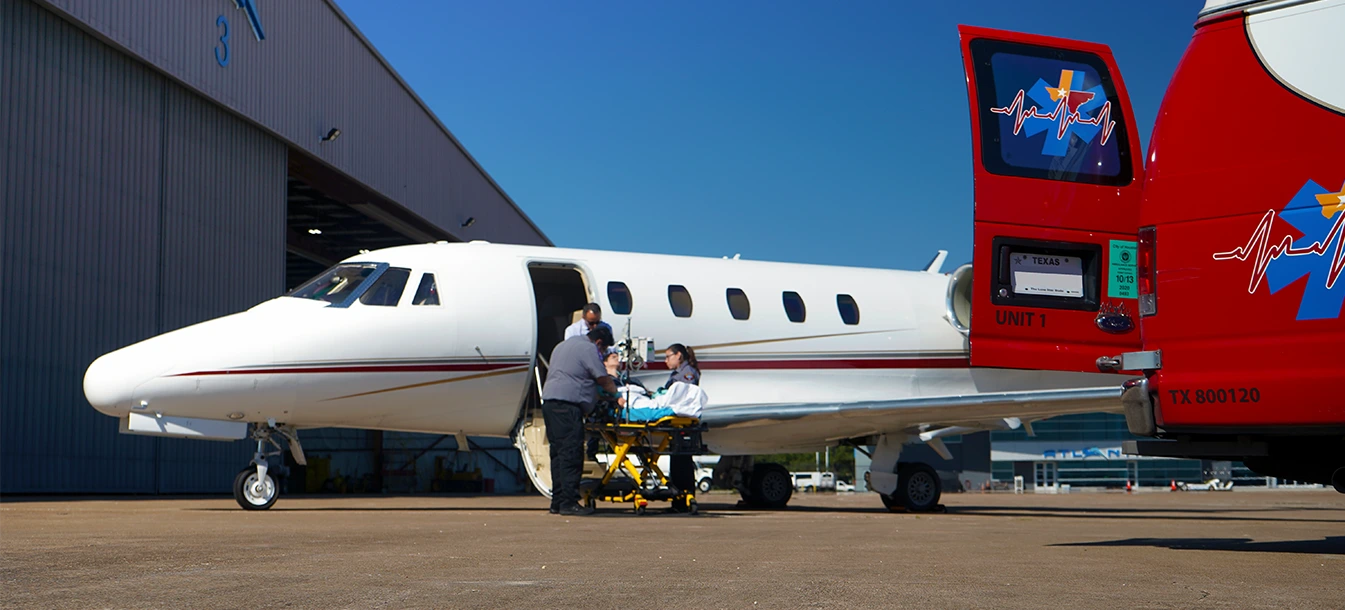
Fixed-Wing Air Ambulance Repatriation
We arrange international fixed-wing air ambulance flights between countries worldwide and domestic fixed-wing air ambulance flights within the United States.
When a patient needs to return to a home country, familiar healthcare system, or preferred facility for continued care, families and care teams need clear guidance, precise communication, and a single point of contact they can trust.

Worldwide
Network

International
Air Ambulance

Bed-to-Bed
Transport

ICU-Equipped
Aircraft

24/7
Support

Safety &
Compliance
Air Medical Transport provides complete bed-to-bed fixed-wing air ambulance transport management for repatriation cases within the United States, from and to the United States, and worldwide between international locations.
Our Flight Coordinator Specialists manage each transport through selected FAA Part 135 and/or EASA-certified fixed-wing air ambulance operators. They coordinate transport planning, medical logistics, communication, and regulatory requirements so families, facilities, and authorized representatives understand what happens next.
Families and facilities do not need to coordinate multiple parties alone. Air Medical Transport remains the single point of contact throughout the fixed-wing air ambulance repatriation process.
Founded by a flight paramedic with more than 20 years of experience in prehospital medicine, air ambulance transport, and international medical logistics, Air Medical Transport brings practical, patient-centered judgment to the planning of complex air ambulance transports.
The patient's physicians and appropriate clinical parties guide clinical decisions. Air Medical Transport uses the information provided to review transport requirements and operational feasibility, then clarify next steps.
Repatriation planning may need to align clinical information, discharge timing, receiving-facility acceptance, documentation, routing, and international transport requirements before booking can move forward. Early quote review helps clarify what must be aligned first.
Why Fixed-Wing Air Ambulance Repatriation Is Needed
Fixed-wing air ambulance repatriation may be needed when continued care, discharge planning, family support, or patient safety cannot be managed appropriately through standard travel or local options.
In some cases, the goal is to return to a home country for continued treatment or transfer to a preferred facility closer to family. In other cases, the objective may be continued care at a specialized center, rehabilitation, long-term care, palliative care, or hospice support when clinically and logistically appropriate.
Many repatriation patients are medically stable but cannot travel commercially because they require monitoring, oxygen, equipment, positioning support, or specialized medical support during transport. Hospitals may also need a structured plan for international patients when discharge, receiving-facility acceptance, documentation, and transport logistics must align.
In complex international situations, families may choose to contact an embassy or consulate for consular guidance, documentation support, or local-process clarification. Air Medical Transport can coordinate transport-related communication when appropriate authorizations and documentation are available.
Each situation is unique. Our role is to reduce transport complexity and identify fixed-wing air ambulance repatriation options based on the patient's condition, physician guidance, timing needs, origin, destination, documentation, and operational availability.
Global Fixed-Wing Repatriation Coordination
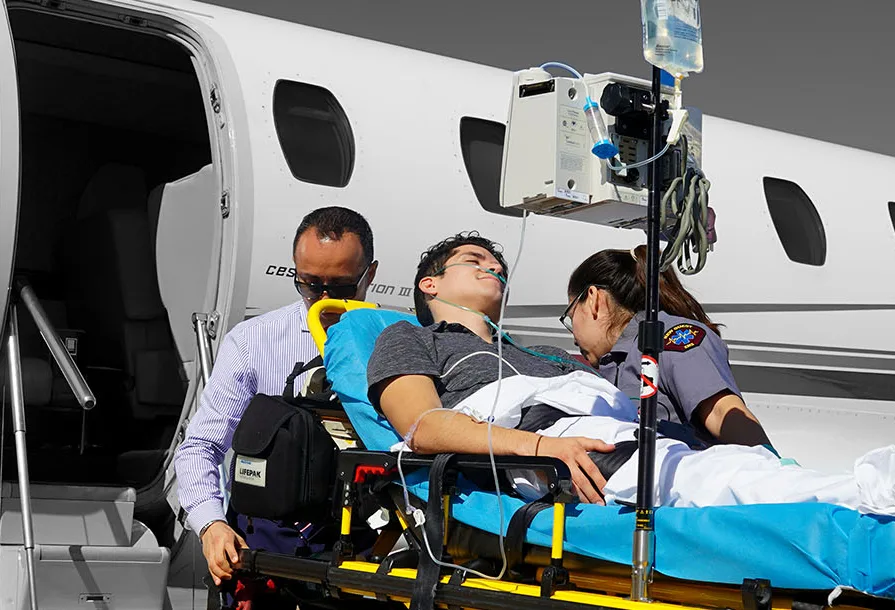
Our team manages the fixed-wing air ambulance repatriation workflow, which may include:
- patient condition, care-team guidance, and transport requirement review
- coordination with sending and receiving physicians and facilities
- required medical support, equipment, oxygen, monitoring, and patient positioning details
- communication with authorized family representatives, embassies, and consulates when applicable
- origin, destination, airport suitability, and bed-to-bed transfer planning
- routing, weather, documentation, customs, landing permissions, overflight permits, and country-specific clearances when required
- aircraft, flight crew, and medical team availability review through selected fixed-wing air ambulance operators
- structured continuous transport monitoring
This approach helps patients, families, and care teams understand what must align for monitored fixed-wing air ambulance repatriation across domestic, international, and intercontinental routes.


